



Hello.

Arkansas Children's Hospital
General Information 501-364-1100
Arkansas Children's Northwest
General Information 479-725-6800
Oklahoma Baby Saved by Fetal Echo, Surgery for Aortic Arch Hypoplasia at Arkansas Children’s

Baylor Hutchinson smiles as her mom, Taylor, holds her up.
Taylor Hutchinson, of Sallisaw, Okla., walked into her 20-week ultrasound in Fort Smith, Ark., brimming with all the excitement of being a first-time mom. She and her husband, Hunter, had spent three years trying to conceive, and they were thrilled to see their daughter, Baylor.
The anatomy scans were initially normal, but because Baylor was a bit “stubborn in utero,” they were sent back for additional scans, Taylor said.
"We were having a great day, super excited. And then our OB came in, and she was like, 'I'm worried about your baby's heart.' And that was world-shattering for us. I remember my whole world stopped. You don't hear anything else, you don't see anything else in the moment. All you can think about is, 'Something is wrong with my baby's heart,'" Taylor said. "She said, 'We're going to send you to Arkansas Children's.'"
The darkness of that moment eventually gave way to light, as Baylor went on a life-saving journey with the Arkansas Children’s Heart Institute — from a fetal echo to open-heart surgery to repair her aortic arch hypoplasia at Arkansas Children’s Hospital (ACH) in Little Rock.
"We always heard people in this area of Oklahoma would take their kiddos to Arkansas Children's because it's the best hospital to go to. We have several, but Arkansas Children's is the recommended one," Taylor said. "If we had a question, there was always someone to answer it for us and answer it in a way we would understand and were comfortable with. We received unwavering support through the entire journey."
Planning Ahead: Fetal Echo
Baylor's parents beam when talking about their daughter's big personality at just four months old. But her dad said she's special for more than just her sweet smiles and giggles.
"Baylor is special because of what she's been through. It's going to be the hardest thing that she's ever done in her life. It's the hardest thing we've ever dealt with in our lives," Hunter said. "But for a baby to go through that when they're born and to recover as fast as she did, that's special."
While Taylor admits she was “a little overwhelmed” at the size of ACH, her nurse immediately put at ease for her fetal echocardiogram in the fall of 2025. This fetal test is noninvasive and feels like an ultrasound. It provides a detailed view of a baby’s heart, including heart rate and rhythm, cardiac valves and chamber sizes.
"It was super easy," Taylor said. "The nurse handling the fetal echo was super welcoming and gave us all the information we needed."
The echo revealed Baylor likely had aortic arch hypoplasia, type II, where the entire aortic arch is too narrow to carry blood throughout the body. They repeated the echo for Baylor about six to eight weeks later. The doctors confirmed the diagnosis at Baylor's birth.
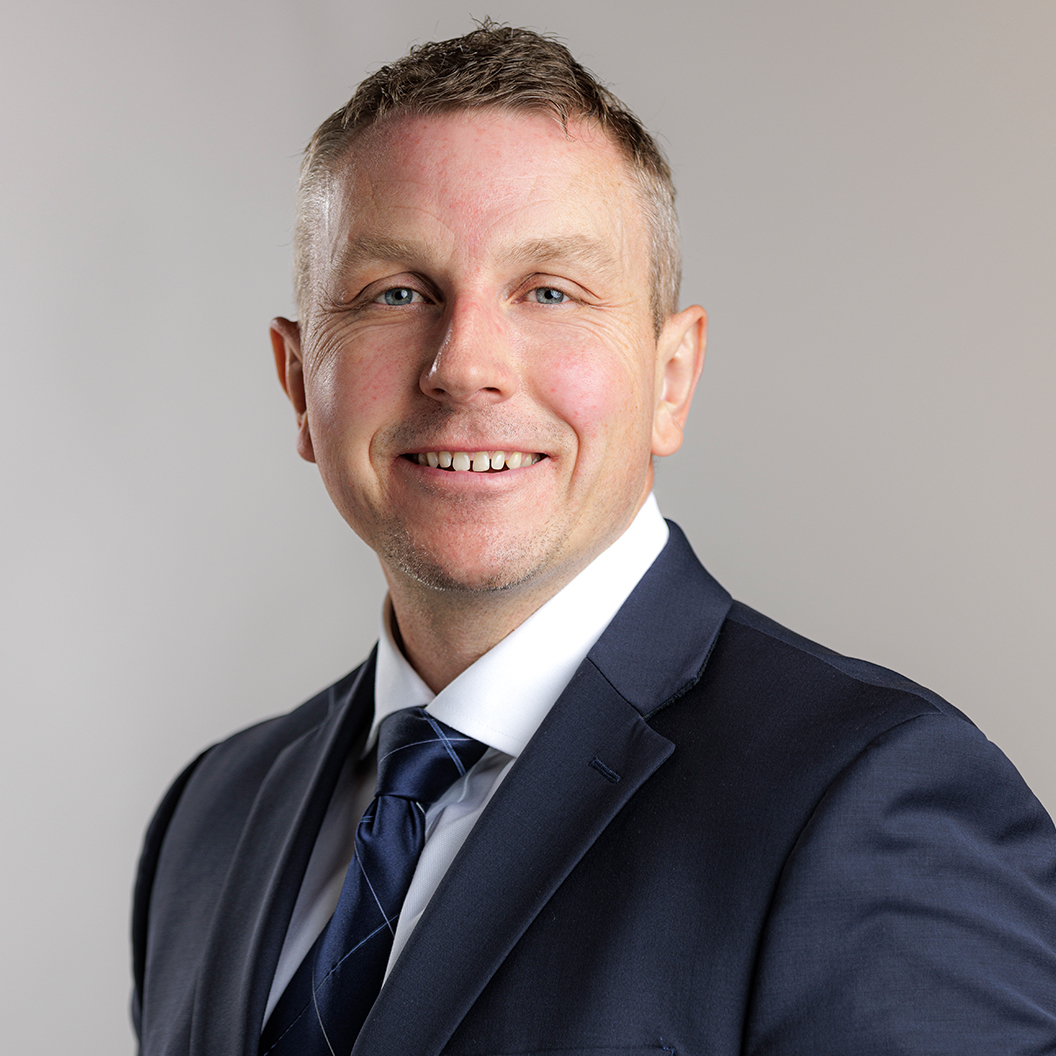
Aortic arch hypoplasia occurs in about four in every 10,000 live births in the United States, said Lawrence Greiten, M.D., a pediatric congenital heart surgeon at ACH and associate professor of surgery in the department of surgery at the University of Arkansas for Medical Sciences (UAMS) in Little Rock. However, two out of 1,000 children with congenital heart disease have coarctation of the aorta, or narrowing of the aorta, and some type of aortic arch hypoplasia, making the procedure to fix it more common. Pediatric surgeons typically repair a patient’s aortic arch hypoplasia in infancy.
"If you think of the mini candy canes we all have at Christmas time, that's what an aortic arch should be, size-wise, about five millimeters across. The hypoplastic arch in these kids is about the size of a single strand of angel hair pasta, maybe a regular spaghetti noodle," Dr. Greiten said.
Prenatal cardiac imaging is vital, so ACH has a team of physicians and sonographers in its fetal echo program to help patients locally and regionally.
"It answers a lot of questions for the parents. If there is an abnormality or something to be concerned about, the parents then get to hear and learn about what that is. Mentally, they're also able to prepare for that," Dr. Greiten said. "From a surgical and physician standpoint, this is immensely helpful, because now at the time of birth, medical teams can be in place. Medications can be ready. Surgical teams can be alerted and aware of things."
For two weeks in December, the Hutchinsons stayed in Little Rock thanks to accommodations through ACH to deliver at UAMS. Taylor was induced at 38 weeks on Dec. 23, 2025 and transported via Angel One to the Arkansas Children’s Cardiovascular Intensive Care Unit (CVICU).
"Being first-time parents, you don't know what to expect in pregnancy, childbirth or having a newborn to begin with. Then it's amplified with all the extra monitoring. It created a lot of anxiety, but UAMS and Arkansas Children's were all transparent. We knew what was next at every corner," Taylor said. "I think that's the biggest thing - we had a lot of faith in our doctors and teams."
The Expected and Unexpected
In the ACH CVICU, Baylor was closely monitored and tested with echocardiograms and X-rays. Because the CVICU could accommodate only two visitors at that time, the family was appreciative that ACH offers AngelEye cameras, secure webcams focused on a patient, allowing them to see their daughter while away from the hospital.
Doctors put Baylor on prostaglandins (a medication to help with blood flow) through an umbilical line. There was a 50 percent chance the medication would heal her heart without surgery. However, her heart was not the only complication.
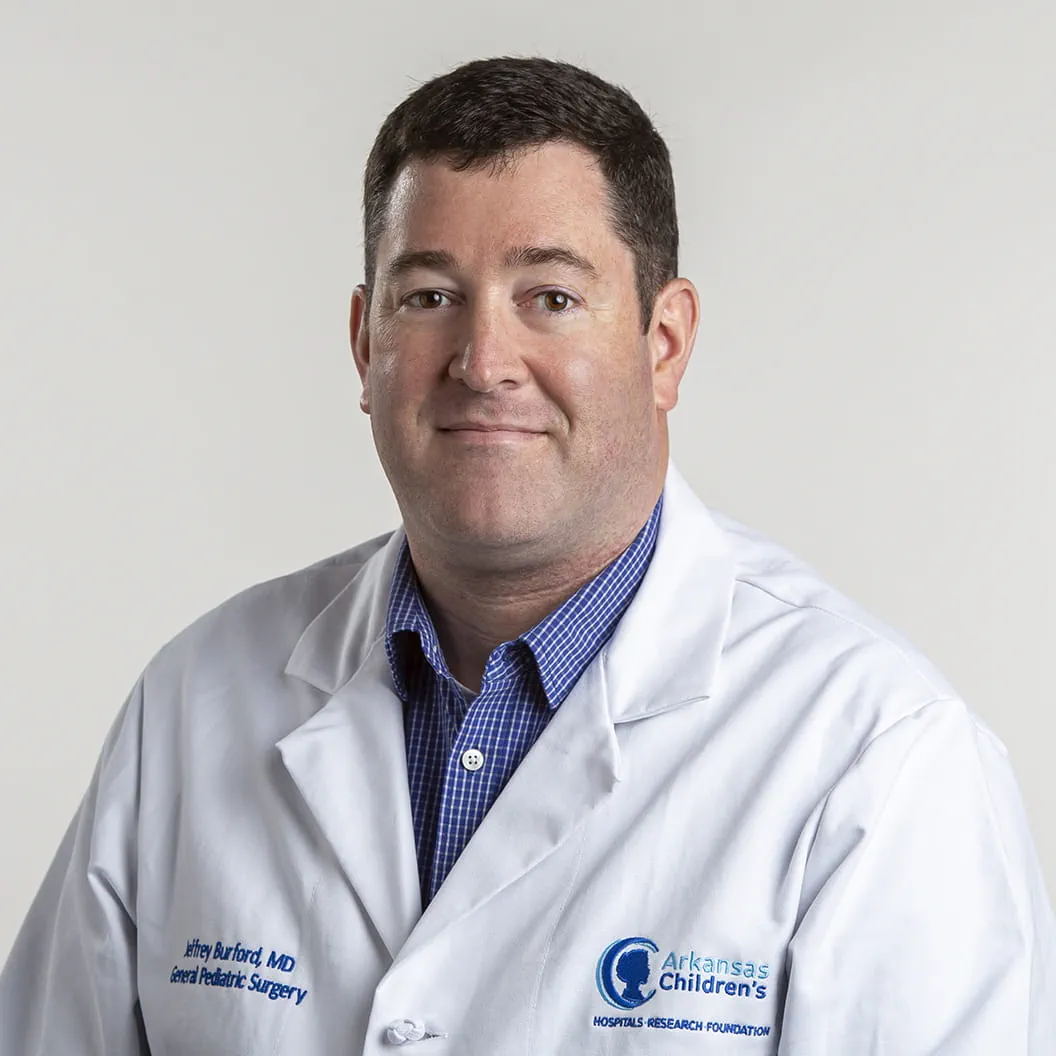
Her CVICU nurse noticed something did not look right with the size of her stomach, and Baylor threw up a lime-green bile. She was diagnosed with malrotation, where her large and small intestines were flipped. Jeffrey Burford, M.D., a pediatric surgeon, the National Surgical Quality Improvement Program pediatric surgeon champion at ACH and associate professor of surgery at UAMS, performed an emergency Ladd’s procedure Dec. 27, aligning the intestines to their proper place.
"Everything happened so fast. We were in the waiting room to talk to the surgeon, and our family happened to come into town that day. Thankfully, our nurse got off shift and went downstairs to find our family. She knew we were taking it hard. We were super appreciative of that," Taylor said.
On Jan. 5, Dr. Greiten performed an aortic arch reconstruction with a delayed sternal closure the following day on Baylor, who was about six pounds, with a heart roughly the size of a strawberry. He also repaired an atrial septal defect and indentation in her arch.
"On the day of her heart surgery, every nurse we walked past in the hall was like, 'She's going to be OK. Everything's going to be OK,'" Taylor recalled through tears.
To ensure a clear view of the heart with minimal blood, and to keep the organs safe during surgery, Dr. Greiten used a technique called deep hypothermic circulatory arrest (DHCA). Blood is pumped out of the body via a heart-lung machine, stopping circulation and cooling the body so surgeons can "turn off the body so to speak," he explained, slowing metabolic activity in the brain, kidneys and other organs. He widened the arch using a tissue graft, similar to the way a "tailor would let out a coat," he said. The machine then pumps blood back into the body without damaging the organs. Baylor was cooled to 18 degrees and spent about 20 to 25 minutes under DHCA.
Dr. Greiten said widening an aortic arch using this method is common at Arkansas Children’s.
"One of the safety measures we have here at Arkansas Children's Hospital is there's always two surgeons in the room, two operating surgeons, especially during the critical portions," he said. "This is not quite standard practice in the U.S., but I think many hospitals that have the manpower to do so have adopted this philosophy."
Creating New Memories

"Arkansas Children's is one of the best places in the world, especially for baby care. Everybody's there for you - they're not there to make a paycheck and go home," Hunter said. "They're there to take care of you and your baby. And that feels different to me, because there's not many places like that."
Dr. Greiten praised Baylor’s caring family, and while it wasn’t the start they, or any family, dream of for their child, he always makes sure his patient families know their child is a joy.
"I always start with a 'Hey, congratulations.' I don't think people hear that enough. A lot of times it's, 'We're so sorry your baby's in the CVICU.' And it shouldn't be a moment where people are sad. Medical technology has come so far that Baylor, in all honesty, is going to have a normal life," he said. "She's going to be a normal kid. So, she can play with her friends, she can go to college, she can become anything she wants in her career."
* This article was written by the Arkansas Children’s content team and medically reviewed by Lawrence Greiten, M.D.
Patient Care Navigator: Helping Out-of-State Families Navigate Arkansas Children’s
Pediatric Cardiology Specialty Nurse Abby Smith, R.N., BSN, CCRN, CPN, is a patient care navigator for Arkansas Children's Heart Institute, helping out-of-state families and providers navigate the referral process more easily. But the heart of her role is so much more.
“Families have enough to worry about when their child has heart condition, and if I can help take some of that stress off their shoulders and be able to take care of the logistics side of things, they can focus on what matters most, which is their child, and not have to worry about lodging and appointments, and I can make that part easier for them,” Smith said.
Read more about how she helps out-of-state families receive an appointment at Arkansas Children’s Heart Institute.
Watch Baylor's Journey

Meet the Team
-
-
Lawrence Greiten, MD
Cardiothoracic Surgery
Little Rock


Appointments
New and existing patients can visit our appointment hub for several ways to request an appointment, including online scheduling for many services.
Request an appointment